Bee Empowered to Conserve
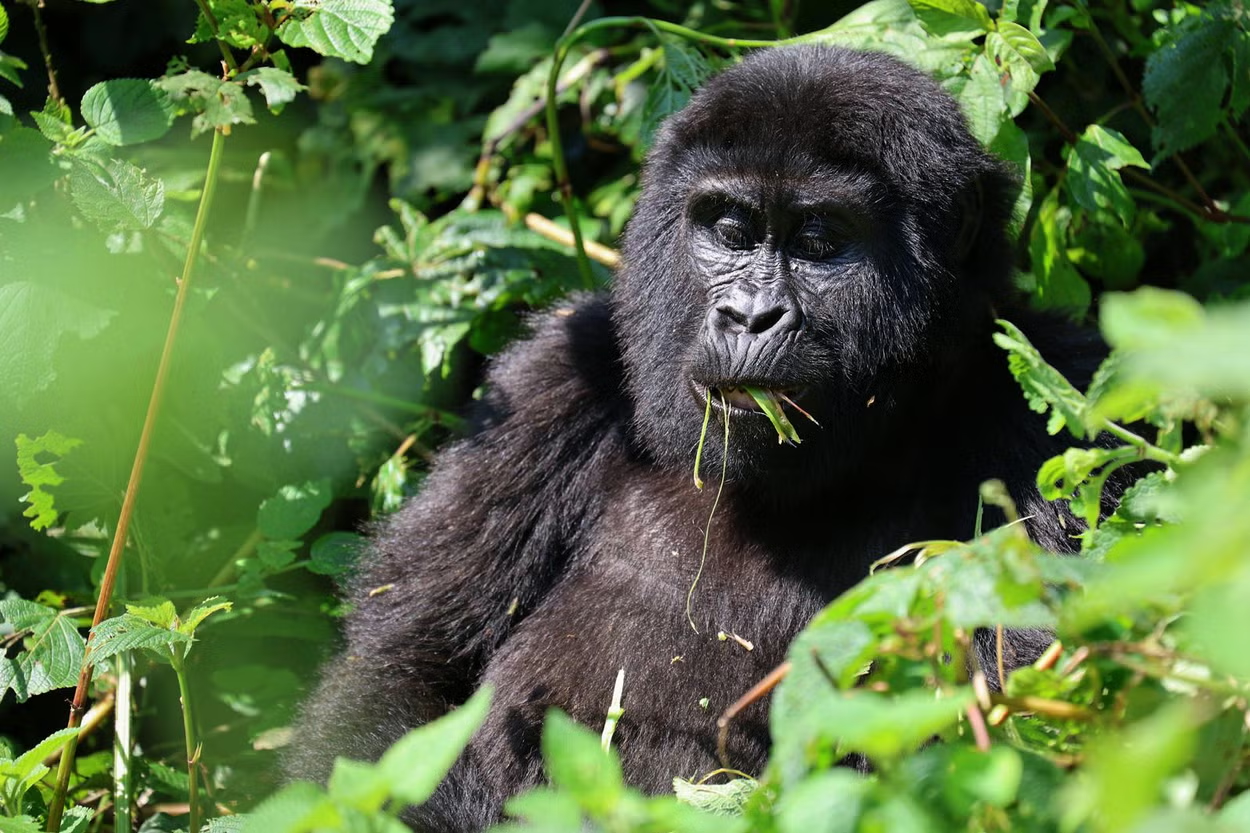
Uganda is home to over 5,000 chimpanzees of which 13 primate species including over 1,500 are found in Kibale forest national park alone and 600 in the Budongo forest reserve. Chimpanzees mainly live in dense primary tropical rainforest habitats across western Uganda. They are omnivorous creatures that eat both plants and animal flesh and are known to share 98.5% of our DNA. They consume 50% fruits, seeds, leaves, and flowers in their diet. For protein, they also consume mushrooms, insects, and small animals. Depending on their home ranges, chimpanzees can move in pursuit of food over an area of 6 to 70 sq. km. Chimpanzees are an endangered species facing numerous anthropogenic threats.
The 600 remaining chimps in the Budongo Forest Reserve are threatened by poaching, habitat fragmentation, and an unexplained reduction in the abundance of fruiting trees.
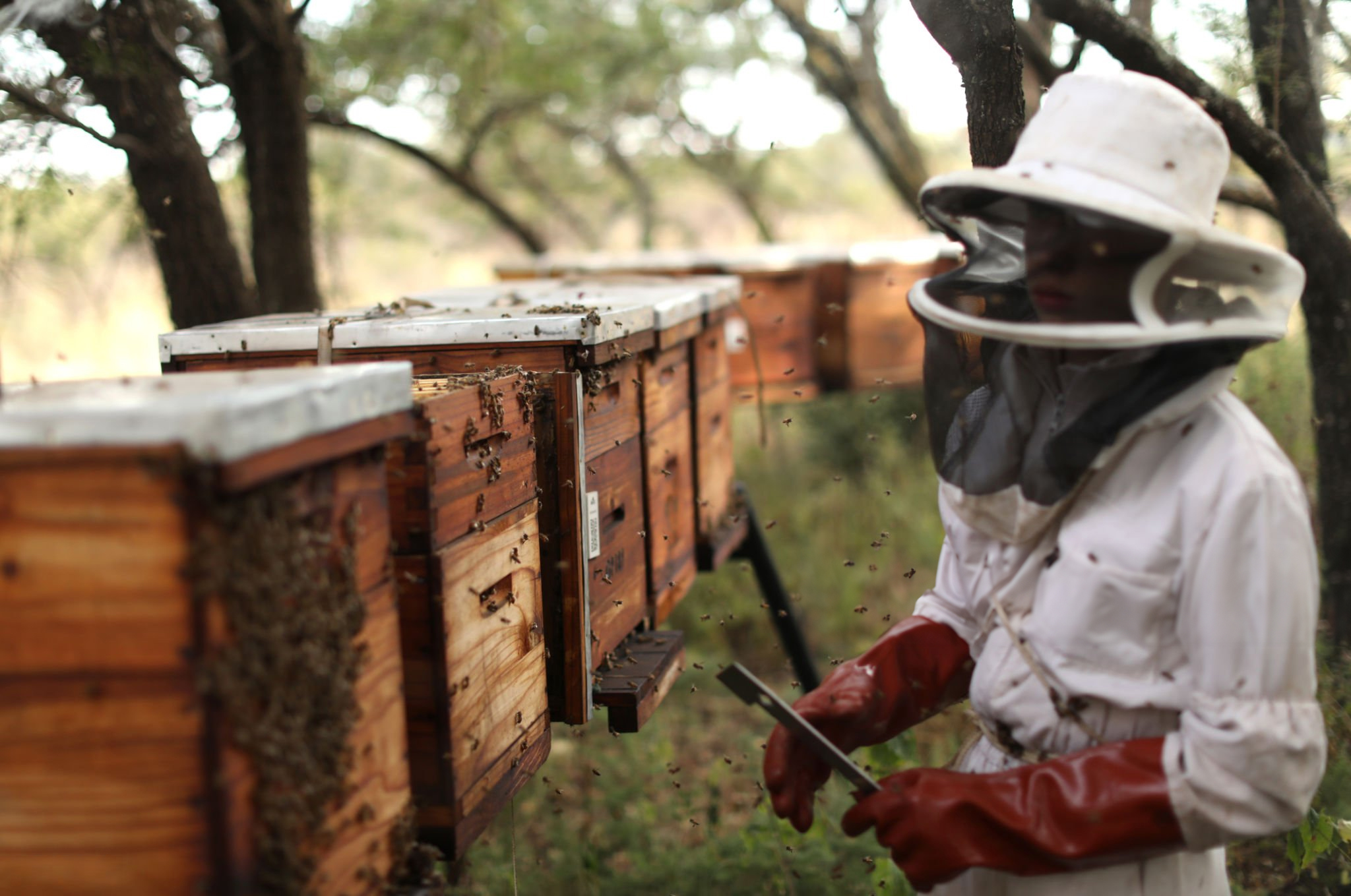
Having detected the threats inside the reserve and the potential effects in the Budongo landscape, Dominion Rescue Foundation has piloted buffer crops and created bee fences with the potential for reducing crop-raiding incidences. Interviews with local farmers to assess the potential of buffer crops in reducing crop raids, mitigating human-wildlife conflict with the possibility of increasing chimpanzee survival close to cultivated fields which were done form the basis for this project.
The project will implement the following activities;
- Ecosystem Management and Wildlife Resource Protection Activity -under this activity the project will train 100 rangers both from government agencies and local population to implement a collaborative approach to wildlife management through nature-based solutions. So far 50 rangers have been trained.
- Community Conservation and Wildlife Based Enterprises Development Activity-Establish nature based enterprises such as bee keeping to reduce wildlife -human conflict-20 groups of rangers (bee keepers) each group having at least 25 members shall be formed.
- Capacity Development Activity -Develop capacity of rangers to respond to wildlife threats such as forest and bush fires. This will be done through continuous training and provision of PPEs and firefighting and safety gadgets.
- Governance and Stakeholder Engagement Activities which will result to stakeholder engagement of 50 community volunteer rangers.